Greece welcomed over 40 million visitors in 2024, making it the ninth most visited country in the world. And most of those travelers headed straight for the islands.
With around 6,000 islands scattered across the Aegean and Ionian seas (only 227 are inhabited), choosing where to go can feel overwhelming.
Whether you’re after Instagram-worthy sunsets in Santorini, wild beach clubs in Mykonos, or quiet coves that few tourists ever find, Greece has an island for you. Here’s how to pick the right one.
Understanding the 6 Greek Island Groups
Greece’s islands fall into six distinct groups, each with its own character, architecture and vibe. Understanding these clusters is essential for planning your trip, especially if you want to island hop (ferries run frequently within groups but rarely between them).
The Ionian Islands
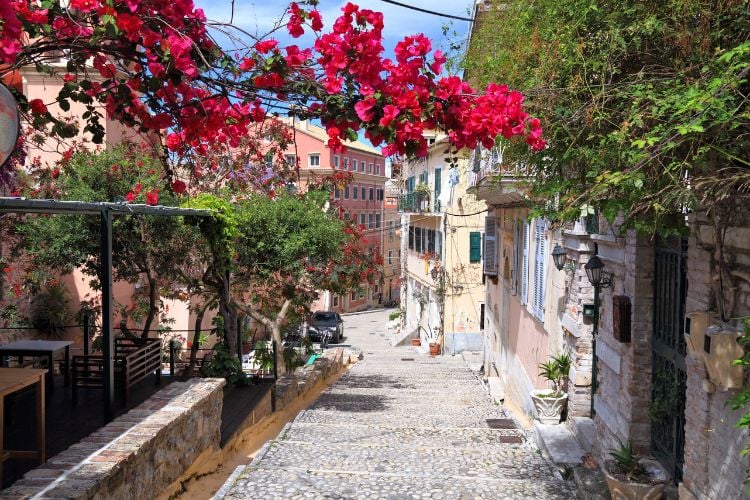
The vibe: Lush, green, and Italian-influenced
Best for: Families, beach lovers and anyone seeking turquoise waters
Key islands: Corfu, Zakynthos, Kefalonia, Lefkada, Ithaca, Paxos, Kythira
The Ionians feel more Mediterranean than classically Greek. Four centuries of Venetian rule left these islands with a different architectural DNA: neoclassical towns, medieval castles, and fortified ports rather than the white-cube houses you see in the Cyclades.
The landscape is surprisingly green, with olive groves and pine forests running right down to the water.
Zakynthos is home to Shipwreck Beach (Navagio), one of the most photographed spots in Greece. Kefalonia offers some of the country’s best beaches without Santorini-level crowds. And Corfu blends Venetian elegance with lively beach scenes.
The Cyclades
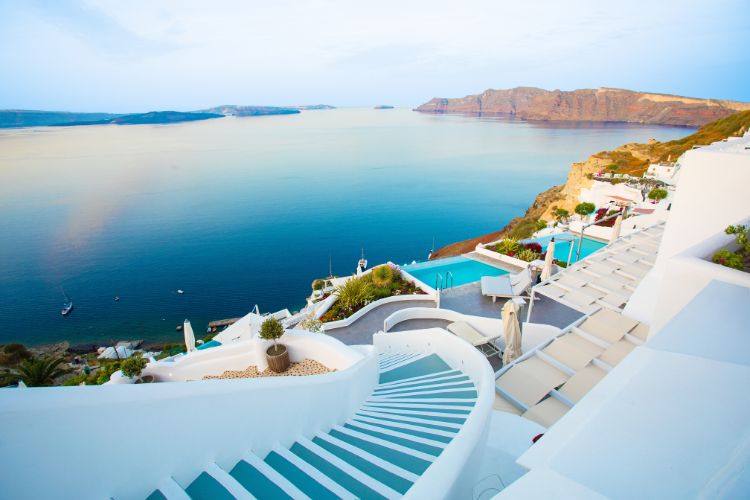
The vibe: Whitewashed houses, blue domes, rocky landscapes, spectacular sunsets
Best for: First-time visitors, honeymooners, party seekers
Key islands: Santorini, Mykonos, Naxos, Paros, Milos, Ios, Folegandros, Serifos, Syros, Tinos
This is the Greece you picture when you close your eyes. The Cyclades are the most famous, most photographed, and most visited island group, and they’re very well-connected by ferry. You can easily hop from Athens to Paros to Naxos to Santorini in a matter of days.
Each island has its own personality within the Cycladic aesthetic. Santorini delivers drama with its volcanic cliffs and epic sunsets. Mykonos brings the glitz and the nightlife. Naxos and Paros offer family-friendly beaches and excellent food. And Milos has moon-like rock formations that look like another planet.
Pro tip: The ferry network is designed like a wheel, with Athens at the center. You can hop easily within the Cyclades, but getting from here to, say, Corfu requires flying back through Athens.
The Sporades
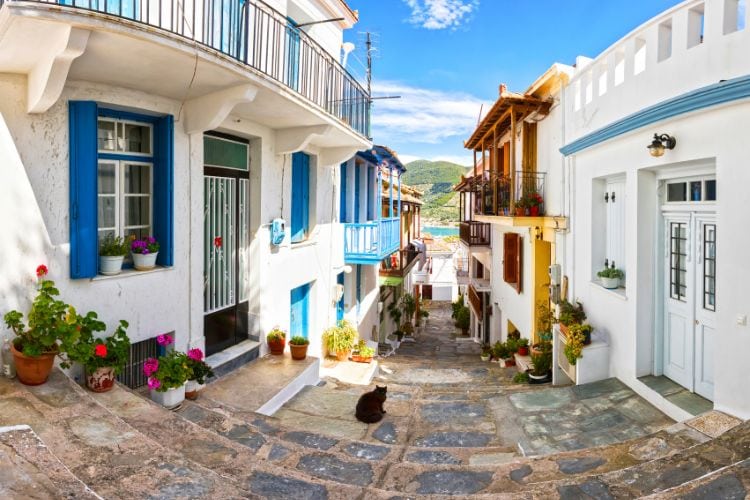
The vibe: Pine forests meet turquoise water, low-key and green
Best for: Nature lovers, “Mamma Mia!” fans
Key islands: Skiathos, Skopelos, Skyros, Alonissos
The Sporades are the greenest islands in Greece, with thick pine forests that grow right down to the water’s edge.
Skiathos has an international airport and some excellent beaches. Skopelos is famous as the main filming location for “Mamma Mia!” (the wedding chapel, Agios Ioannis, sits dramatically on a rock and requires climbing 198 steps to reach).
These islands are harder to reach than the Cyclades (ferries depart from ports north of Athens like Volos), but the reward is fewer crowds and an authentic, unhurried pace.
The Dodecanese
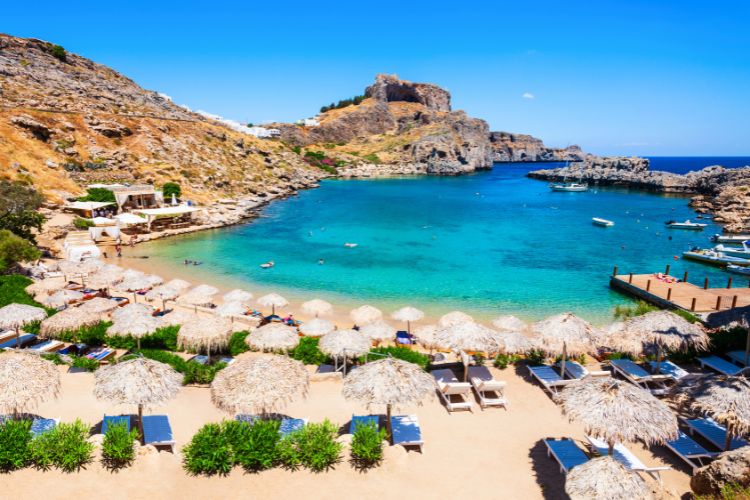
The vibe: Medieval history, Turkish influence, diverse landscapes
Best for: History buffs, divers, off-the-beaten-path explorers
Key islands: Rhodes, Kos, Patmos, Karpathos, Symi
The Dodecanese sit close to Turkey’s coast, and you can feel the blend of Greek and Ottoman influences in the architecture, food, and culture.
Rhodes is the star here; its Old Town is a UNESCO World Heritage Site, and the oldest continuously inhabited medieval settlement in Europe. Walking through its narrow Byzantine and Gothic streets feels like stepping into another century.
Kos offers long sandy beaches and ancient ruins. Patmos is a spiritual destination with monastery-topped hills. And tiny Symi has pastel-colored neoclassical houses stacked on hillsides above a perfect harbor.
The Saronic Islands
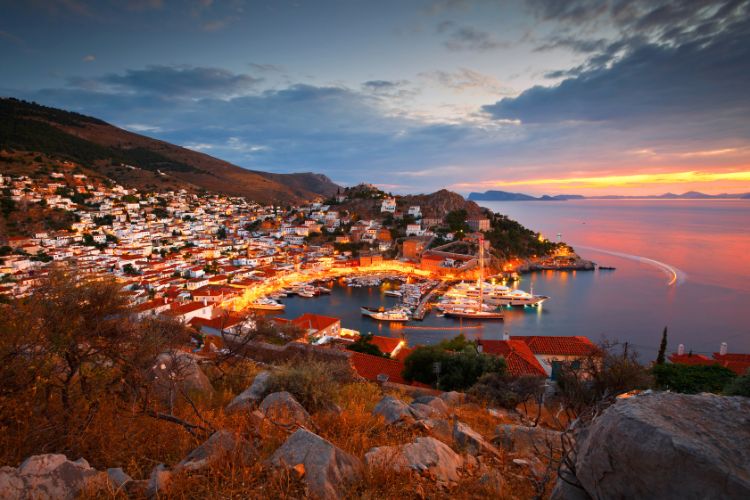
The vibe: Elegant, historic, and very close to Athens
Best for: Day trips, weekend getaways, romantic escapes
Key islands: Hydra, Aegina, Spetses, Poros
These islands sit in the Saronic Gulf between Athens and the Peloponnese, making them perfect for short trips. Ferries from Piraeus take just 40 to 90 minutes.
Hydra bans cars entirely (transportation is by donkey or water taxi), giving it a timeless, peaceful atmosphere.
Spetses has a cosmopolitan edge with horse-drawn carriages replacing traffic noise. Aegina is known for its pistachio groves and the Temple of Aphaia.
If you’re spending a few days in Athens and want a quick island fix, this is the group for you.
The North Aegean Islands
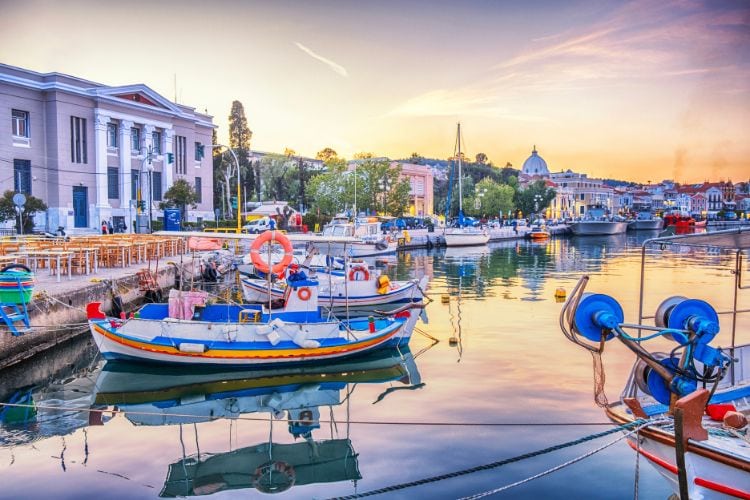
The vibe: Authentic, uncrowded, historically rich
Best for: Independent travelers, foodies, culture seekers
Key islands: Lesbos, Chios, Ikaria, Samos, Thassos
These islands sit closer to Turkey than to mainland Greece and see far fewer international tourists than the Cyclades.
They played important roles in Greek mythology and the War of Independence, and you’ll find ancient ruins alongside traditional villages that feel genuinely untouched by mass tourism.
Lesbos is known for ouzo production (the best in Greece, locals will tell you). Ikaria has a reputation for longevity, with residents living well into their 90s thanks to diet and lifestyle.
Samos produces excellent wine. And island hopping here can be tricky due to distances, but that’s exactly why these islands retain their authenticity.
Which Greek Island Should You Visit First?
For beaches: Kefalonia, Lefkada, Milos, Naxos, Paros, Zakynthos
For nightlife: Mykonos, Ios
For food: Naxos, Crete, Corfu, Santorini, Lesbos
For romance: Santorini, Folegandros, Hydra
For families: Corfu, Naxos, Paros, Rhodes
For authenticity: North Aegean islands, Folegandros, Ikaria
The 10 Best Greek Islands
Choosing just 10 islands from Greece’s 227 inhabited gems feels impossible, but these destinations offer the best combination of accessibility, variety, and authentic Greek experiences.
Some are famous for good reason (Santorini’s dramatic caldera really does live up to the hype), while others offer similar beauty without the crowds. Here’s where to start your Greek island adventure.
1. Crete
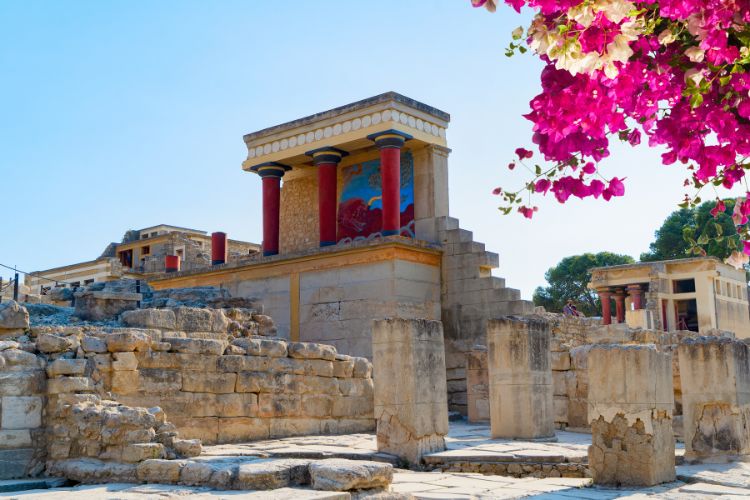
Greece’s largest island and the fifth-largest in the Mediterranean, Crete is big enough that you could spend two weeks here and still not see everything.
In 2025, UNESCO added six Minoan palace centers to its World Heritage List (Knossos, Phaistos, Malia, Zakros, Zominthos, and Kydonia), recognizing Crete as the birthplace of Europe’s earliest advanced civilization.
Beyond the ancient sites, Crete offers pink-sand beaches (Elafonissi), dramatic gorges (Samaria is one of Europe’s longest), excellent wine, and a culinary tradition distinct from the rest of Greece.
The island’s size means you’ll need a rental car to explore properly, but the variety makes it worth the effort.
How long to stay: 5-7 days minimum
2. Santorini
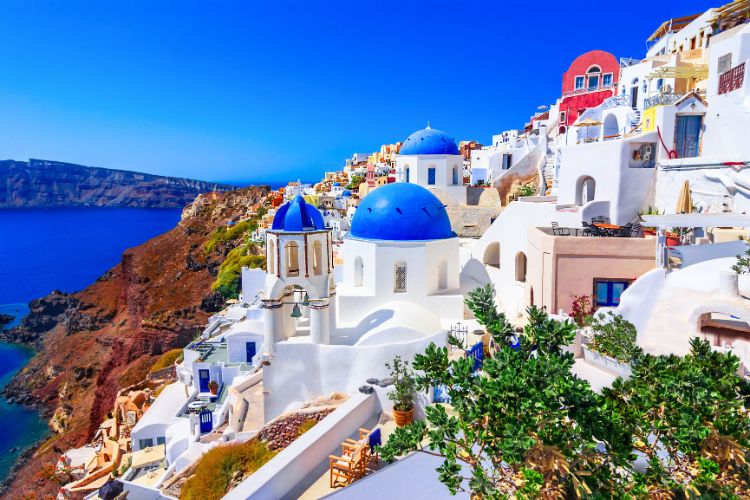
Yes, Santorini is crowded. In 2024, this small island with a year-round population of 15,500 welcomed 3.4 million visitors, making it a poster child for overtourism. But there’s a reason it’s so popular.
Arriving by ferry and sailing into the caldera of a drowned volcano is genuinely dramatic. The clifftop towns of Oia and Fira deliver those iconic white-and-blue views, the sunsets are spectacular, and the volcanic wines (especially assyrtiko) are worth seeking out.
Skip the peak summer months (July and August) when cruise ships dump thousands of day-trippers onto the island. Visit in May, June, September, or October instead for a more manageable experience.
How long to stay: 2-3 days
3. Mykonos
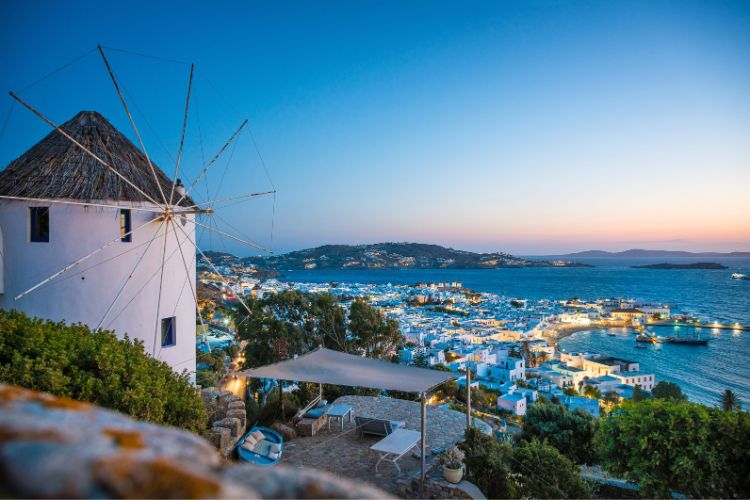
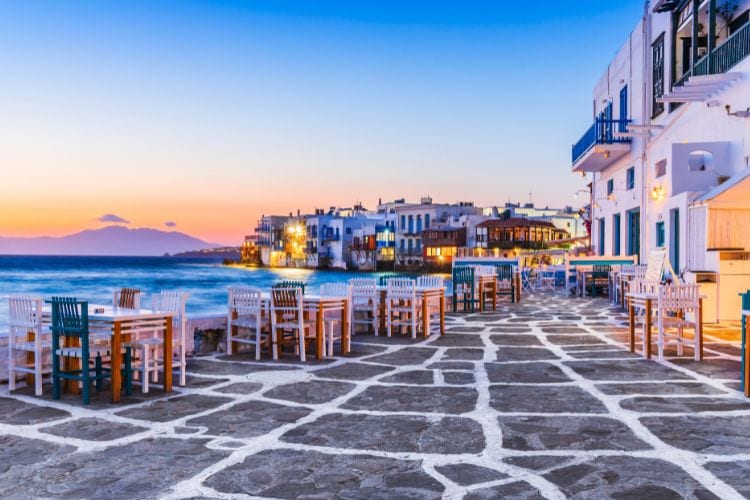
Mykonos built its reputation on nightlife, beach clubs, and celebrity sightings, and it delivers on all three. But beyond the glitz, you’ll find excellent restaurants (some of Greece’s best), beautiful beaches, and the charming maze of Little Venice and the iconic windmills.
The party scene is real (and expensive), but so are the quieter corners of the island. If beach clubs aren’t your thing, head to the less-developed eastern and northern coasts for a different experience.
How long to stay: 2-3 days
4. Rhodes
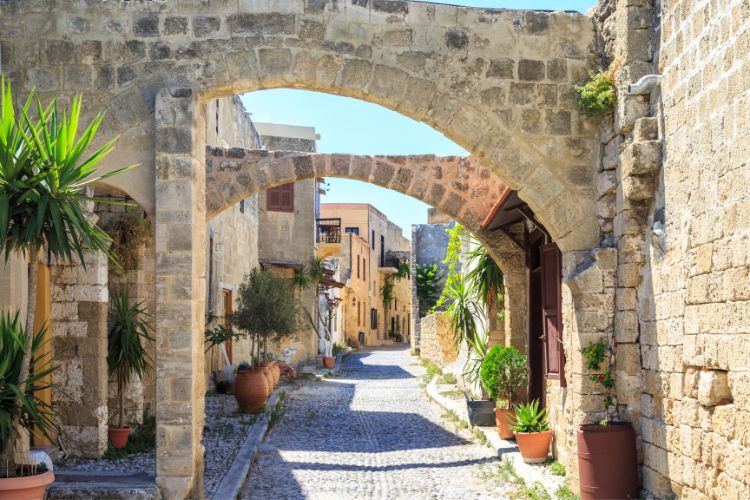
Rhodes Old Town alone justifies a visit. This UNESCO World Heritage Site is the oldest continuously inhabited medieval settlement in Europe, with Byzantine and Gothic architecture packed into narrow cobblestone streets.
Walking through the Palace of the Grand Master and along the medieval walls feels like time travel.
Outside the Old Town, Rhodes offers excellent beaches, ancient ruins (Lindos is particularly impressive), and traditional mountain villages where tourism feels like an afterthought.
How long to stay: 3-4 days
5. Corfu
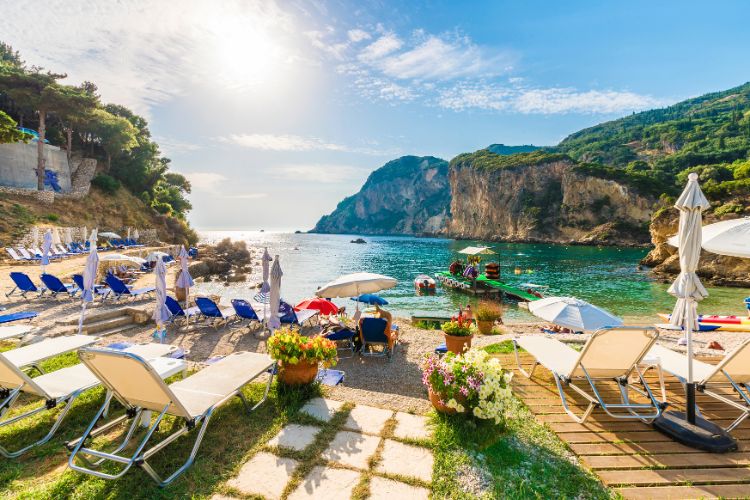
Corfu is one of Greece’s greenest islands, with cypress trees and olive groves covering hillsides that roll down to some of the Ionian’s best beaches.
The Venetian influence is strong here (the island was never part of the Ottoman Empire), giving the architecture and culture a different flavor from the Aegean islands.
Popular with British and Italian tourists, Corfu can get busy in summer, but the island is large enough that you can always find quieter spots.
The Old Town is a UNESCO site, and the food scene blends Italian and Greek traditions in interesting ways.
How long to stay: 3-5 days
Read More: 10 Unforgettable Experiences in Corfu’s UNESCO-Protected Paradise
6. Naxos
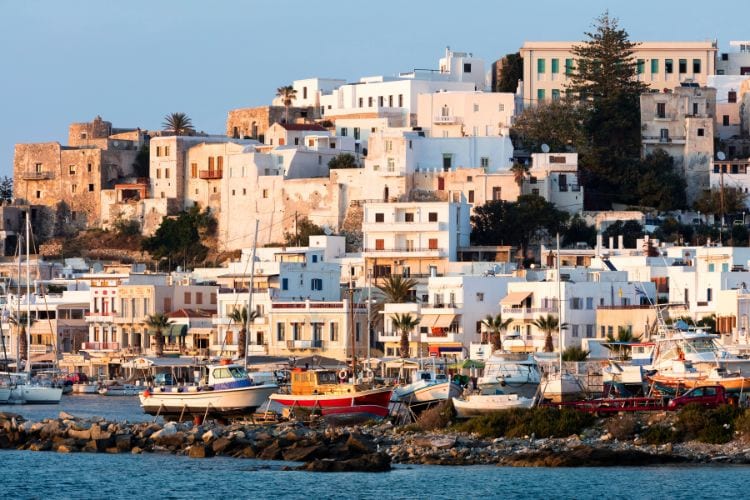
Naxos is having a moment. Long favored by Greeks as a family destination, it’s now attracting international travelers seeking Cycladic charm without Santorini’s prices or crowds.
The island has excellent beaches (some of Greece’s longest stretches of sand), a food scene built on local products (Naxian potatoes and cheeses are legendary), and a relaxed vibe that feels worlds away from Mykonos.
The main town (Chora) is beautiful, with Venetian towers and winding marble streets.
How long to stay: 3-4 days
7. Paros
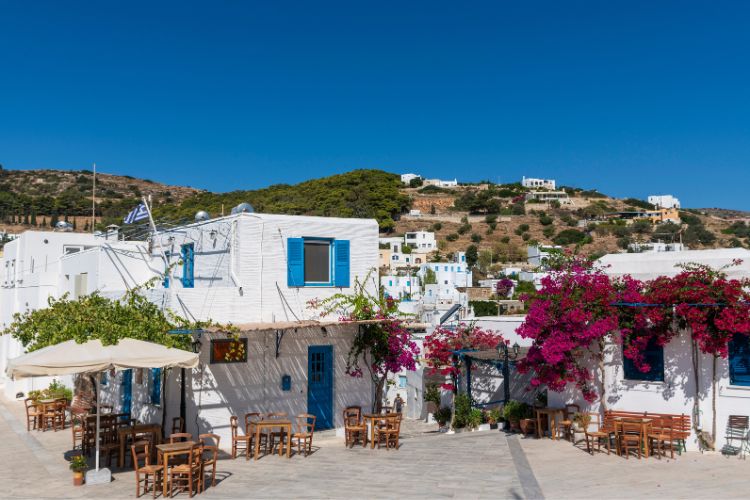
Paros sits at the geographic center of the Cyclades, making it a perfect base for island hopping. It’s become increasingly popular as travelers seek alternatives to overcrowded Mykonos and Santorini, but it maintains a chilled-out atmosphere.
The beaches are excellent, the traditional villages (Naoussa, Lefkes) are postcard-perfect, and the kitesurfing scene at Golden Beach attracts watersports enthusiasts from across Europe.
Paros strikes a nice balance between developed tourism infrastructure and authentic island life.
How long to stay: 3-4 days
8. Milos
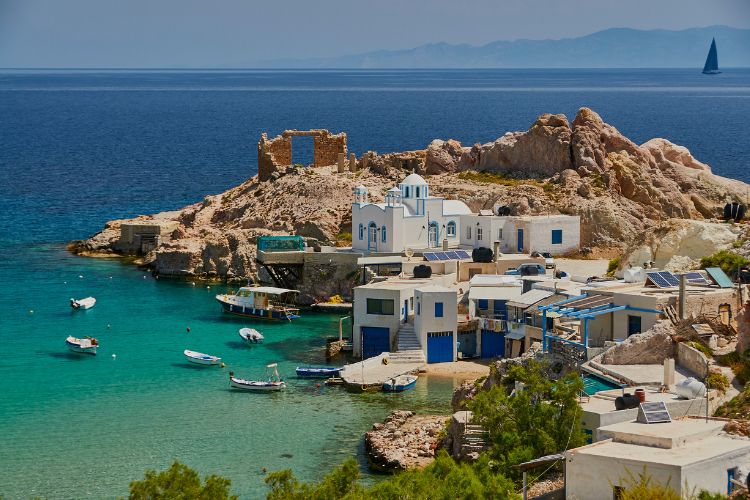
Image by james gardiner from Getty Images via Canva
Milos kept its raw volcanic beauty under wraps for years, but social media changed that. The island’s moon-like rock formations and cyan-blue waters (especially at Sarakiniko Beach) are now firmly on the travel radar.
Beyond the famous photo spots, Milos has over 70 beaches, traditional fishing villages, and excellent seafood. It’s more developed than it was five years ago, but still feels less crowded than Santorini or Mykonos.
How long to stay: 2-3 days
9. Zakynthos (Zante)
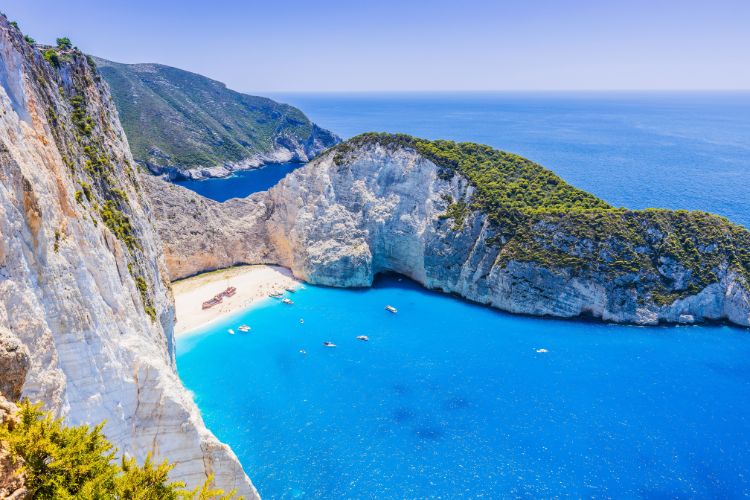
Zakynthos is famous for one thing: Shipwreck Beach (Navagio), where a rusted smuggler’s ship sits on brilliant white sand surrounded by towering limestone cliffs. It’s one of the most photographed beaches in the world, and the reality lives up to the Instagram hype.
Beyond the shipwreck, Zakynthos has a split personality. The southern resort town of Laganas delivers party-focused tourism, while the north and west coasts offer quieter beaches and traditional villages.
The island is also a nesting ground for loggerhead sea turtles.
How long to stay: 2-3 days
10. Kefalonia
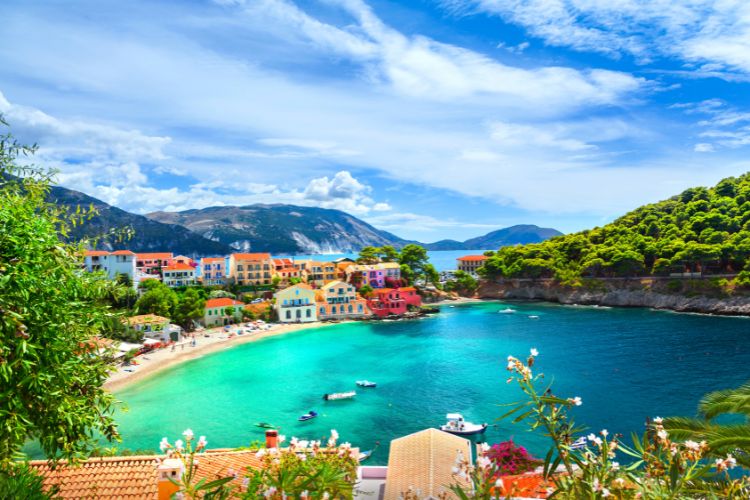
Kefalonia is the largest Ionian island and one of the most beautiful. Myrtos Beach, with its turquoise water and white pebbles backed by dramatic cliffs, regularly tops “best beaches in Greece” lists.
The island also has Melissani Cave, an underground lake with water so clear it looks artificial.
Tourism here is more relaxed than in Corfu or Zakynthos, making it ideal for families or anyone seeking a quieter Greek island experience. The traditional mountain villages and local wine scene add depth beyond the beaches.
How long to stay: 3-4 days
Practical Tips for Island Hopping
Ferry vs. flights: Within island groups, ferries are usually the best option (and they’re an experience in themselves). Between groups, you’ll almost always need to fly through Athens.
Book ferries in advance: In July and August, popular routes sell out. Book at least a few days ahead.
Don’t try to see too much: Three islands in 10 days is better than six islands in 10 days. Travel days eat up time, and you’ll enjoy the trip more if you’re not constantly packing and unpacking.
Consider shoulder season: May, June, September and early October offer warm weather, fewer crowds and lower prices. Many island businesses close from November through March.
Expect delays: Greek ferries sometimes run late or get canceled due to weather (especially the Meltemi winds in July and August). Build buffer time into your schedule.
Final Thoughts
There’s no such thing as the “best” Greek island because it depends entirely on what you want.
Santorini and Mykonos deliver the postcard-perfect Greece you’ve seen in photos, but they also deliver crowds and high prices.
The Sporades and North Aegean islands offer authenticity and natural beauty without the tourist infrastructure. And islands like Naxos and Paros sit somewhere in the middle.
The beauty of Greece is that with 227 inhabited islands, you can always find one that fits exactly what you’re looking for.
Need a hand planning your trip? Here are the sites and services we rely on most, from booking tools to travel products we love.
Inspire your next adventure with our articles below:
Author Bio: Danijela Horvat is a travel writer with a passion for discovering new destinations. With a background in journalism and photography, she is trying to translate her own experience into articles.
Want to discover more hidden gems and helpful travel tips? Join our free newsletter for the latest travel secrets and travel articles.
We are reader-supported and may earn a commission on purchases made through links in this article.