South Africa’s Addo Elephant National Park doesn’t have the word elephant in its name for nothing.
Here, the famous Hapoor Dam often sees gatherings of hundreds of elephants, too many to count – although you’re welcome to try – and definitely more than you’ll see in one place when compared to any of South Africa’s many other safari parks.
These gatherings of elephantine proportions often include different groups tentatively greeting one another while warthogs scurry around at their ankles, desperately trying to blend in.
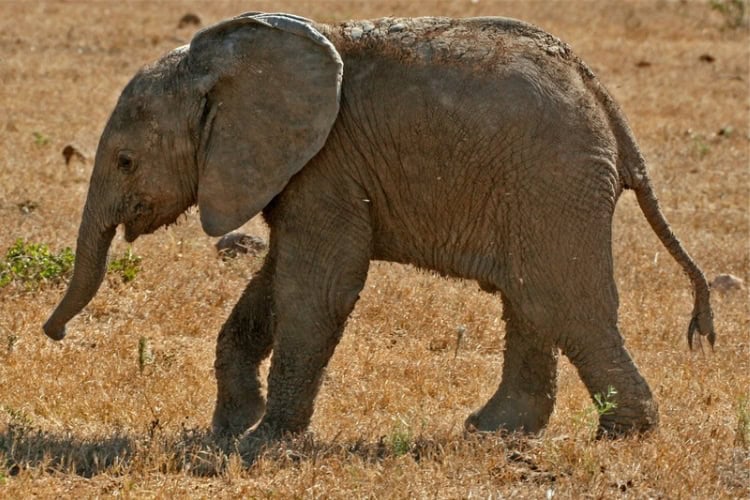
There are new mommies cautiously hanging around the edges with their tiny ones hiding under their bellies, while their naughty older siblings splash around in the muddy pond.
At the same time, bulls stand ousted and alone on the edges – their testosterone filling the empty spaces that the others have left around them.
Meanwhile, lazy older elephants lay spread-eagled in the mud like spatchcock chickens. Naturally, there are also the boisterous teenagers starting arguments with each other.
All just part of what can be expected when multiple families gather in one place.
Addo, as it’s known to locals, is actually the perfect place for family gatherings, elephant or otherwise. South Africa’s third-largest national park has so much more to offer families than just happy hour at Hapoor.
Where to Stay at Addo Elephant National Park

Addo’s main rest camp has several accommodation options to suit any taste and budget. With a waterhole located just outside the camp, one doesn’t even have to leave to see some of the park’s elephants.
An underground hide gives a unique perspective as these grey beasts come for a drink right under your nose.
The amazing Addo Interpretive Centre also offers a glimpse into the area’s history. And there’s the chance to gain a better understanding of how elephants hear, to see a real-life “ellie skellie,” and identify some tracks in the sand while the kids play on a jungle gym shaped like an elephant.
There’s also a large swimming pool, a short wheelchair-friendly discovery trail, a small shop and a good local restaurant.
Several other accommodation options are available in the main section of Addo. Spekboom Tented Camp, which is situated in the middle of the bush and Matyholweni, which can be found 3km off the N2 in the stunning forested section down south.
The camps are utterly spotless, and the staff will go out of their way to accommodate you.
Other accommodation options are available in the park’s lesser-known northern sections. There are luxury thatched cottages with their own private plunge pools at Nyathi Rest Camp, and rustic, secluded Narina Bush Camp, is suitable for anyone just wanting to get away from it all.
On the other hand, many privately-owned luxury lodges can be found both within and outside the park for those who want a bit of bush pampering.
What to Do at Addo Elephant National Park

Of course, the main attraction is the park itself. You can self-drive, filling your days with gentle loops offering sightings of black-backed jackal, buffalo, meerkat, jackal buzzard, lion, hyena, hartebeest, zebra, and, of course, more elephant than anyone can count.
You could also choose to embark on guided game drives, by day or night, or hire a private guide. This gives you a chance to sit back and relax while the guide shares some interesting information about the area and its inhabitants.
Our guide, Siya, was exceptional and full of fun facts that kept us entertained. He told us about the leopard tortoise that has a fetish for hyena poo because it ingests high calcium by crunching bones.
He taught us how an eland communicates via the clicking sound its legs make, which, unfortunately, means that at night, they might as well be wearing a cattle bell.
We also learnt about porcupines with their defense mechanism of seemingly built-in ABS brakes. And did you know that a spring hare is not even really a hare? According to Siya, it should instead be named the spring rat.
Getting Around the Park

Getting around in Addo is comfortable in any vehicle, thanks to the 120km of tar and gravel roads.
When you need a break, Jack’s Picnic Site is a stunning place to stop and relax after you have had your fill of ellies at Hapoor. This unique spot offers private braais with tables tucked in between the trees, and the fences mean you can walk around freely without a care in the world.
For those looking for more of an adventure, the Bredrogfontein 4×4 trail is a stunning four-hour route that winds through rocky hills and kudu-filled forests before descending to the arid Darlington Dam section of the park.
The park also offers a variety of hiking trails through the Zuurberg Mountains or along the coastline. At the same time, ocean eco-tours are available for those who want to round off that Big Seven list with some sightings of the marine kind.
A Brief History of Addo

By the 1800s, the elephant herds that were once in abundance in this area had been decimated by hunters. But with farmers beginning to colonize South Africa, a battle of wills was still to be fought between man and beast over water and food sources.
The elephants were on the losing side of this battle, as is so often the case. Sadly, 114 of them were killed in the space of one year, at the order of the government as part of a plan to exterminate them.
With just 11 elephants remaining, the park was declared in 1931, but the elephants were far from friendly to their human foes.
In an attempt to stop the elephants from raiding crops in neighboring farms and to encourage tourism, the elephants were kept well fed with oranges at what is now the watering hole in front of the main camp.
The plan worked well, and in 1945, the park manager added an elephant-proof fence to his genius solution to the human-wildlife conflict at Addo.
The feeding of oranges to the elephants was eventually stopped. But until recently, a sign at the gate forbade tourists from bringing citrus fruits into the park because, as we all know, elephants never forget.
Addo Today

Lions and spotted hyenas were introduced into the park in 2003, and today, Addo is also home to one of the largest disease-free buffalo herds in South Africa. Along with over 600 elephants that call the park home, black rhinos, caracals, meerkats, zebras, and a variety of antelope are frequently seen.
The Zuurberg Mountains in the northern reaches of the park are also home to aardwolf and mountain reedbuck. Meanwhile, the Darlington Dam and its surrounds offer an arid habitat for species such as gemsbok and black wildebeest.
And then, of course, there is the unique Addo flightless dung beetle that we eventually spotted after duly slowing down and examining every piece of ‘ellie-foo-poo’ that we came across (yes, that is a lot of slowing down).
The park is also unique in that it encompasses an immense array of vegetation. It stretches from the semi-arid Karoo to rugged mountains, through river valleys, and down to a wild coastline with the longest dunes in the southern hemisphere.
This also means that it can lay claim to being home to the Big Seven, with great white sharks and southern right whales included in the ultimate line-up.
Planning the Perfect Trip to Addo

What makes Addo especially memorable is that it offers a simple safari. It doesn’t demand early starts or marathon game drives to feel rewarding, making it ideal for traveling with children or older grandparents.
Between the hides, picnic sites, short walks, and interactive interpretive centre, kids are kept engaged while parents still get that feeling of really getting away from it all.
When planning an Addo holiday, booking accommodation inside the park is well worth it, but book early to secure your spot, especially during peak school holidays.
Aim for at least two to three nights to avoid rushing, and be sure to do at least one guided drive to really bring the experience to life.
Addo also slots beautifully into a Garden Route itinerary, making it a natural first or final stop.
It’s an easy drive from Gqeberha (Port Elizabeth) and pairs perfectly with time in Tsitsikamma, Plettenberg Bay, or Knysna, blending wildlife encounters with beaches and forests.
For those road-tripping with kids, it’s a refreshing change of pace that adds depth to a coastal holiday.
In the end, Addo isn’t just about elephants; it’s about connection. To nature, to history, and to each other. Whether you’re counting ellies from a waterhole, sharing a meal under the trees, or watching little faces light up at their first wildlife sighting, Addo has a way of turning a family holiday into a shared story that gets retold long after the dust has settled.
If You Go
Getting There
Addo Elephant National Park is located in South Africa’s Eastern Cape, around 70km (about a one-hour drive) northeast of Gqeberha (formerly Port Elizabeth).
The most common route for international visitors is to fly into Johannesburg (OR Tambo International Airport) or Cape Town International Airport.
From there, you could combine Addo with a road trip to other South African destinations, such as the Garden Route or the Drakensberg, or you could travel by domestic flight to Gqeberha.
From the airport, car hire is straightforward and strongly recommended, as a self-drive vehicle is the best way to explore the park at your own pace.
Best Time to Visit
Addo is a year-round destination, which is one of its biggest advantages. The cooler, drier winter months (May to September) are ideal for wildlife viewing, as animals gather around water sources and temperatures are comfortable.
Summer (October to April) brings warmer weather and lush landscapes, with much time sure to be spent in the camp’s swimming pool.
Booking Accommodations
Accommodation inside the park fills up quickly, especially during South African school holidays (April, July, October, and December).
Booking well in advance is highly recommended, particularly for families wanting interleading units or chalets close to facilities.
Getting Around

Addo is perfect for self-drive safaris, and no 4×4 is required for the main sections of the park, though you may want a higher-clearance vehicle for dirt roads and visibility.
Roads are well-maintained, and the compact layout makes it easy to plan shorter loops, ideal for families or first-time safari-goers. Guided drives are available for those wanting deeper insight without the responsibility of driving.
What to Pack
Pack layers for cool early mornings and evenings, along with sunscreen and hats for warmer days, and binoculars for spotting wildlife at waterholes.
If you’re self-driving, make sure to fill up with fuel before entering the park, as there is only one refuelling point inside.
Those self-catering should also stock up on groceries and firewood in advance. While there is a small shop in the park, it’s best suited to topping up forgotten essentials rather than doing a full shop.
Good to Know
Addo is located in a malaria-free region, making it especially suitable for families. Day visitors are welcome, but staying overnight enhances the experience.
Addo is one of those rare places that feels both accessible and extraordinary. It’s easy to reach, easy to explore, and unforgettable for travelers of all ages.
Suggested Tours
Addo Elephant National Park Tour – Full Day of Wildlife Wonders: A full-day safari in one of South Africa’s largest national parks, known for its large, relaxed elephant herds. Explore diverse landscapes with opportunities to spot the Big Five, plus birdlife and antelope, with lunch, park fees, and transfers included.
Addo Elephant Full Day Safari with Traditional South African Braai Lunch: A small group safari ideal for travelers short on time, featuring morning and afternoon game drives to increase wildlife sightings. Includes a traditional South African braai lunch, snacks, and hassle-free pickup and drop off.
Garden Route and Addo National Park 4 Day Safari: A multi-day adventure combining Addo’s wildlife with the highlights of the Garden Route. Expect game drives, coastal hikes, caves, wine tasting, whale watching in season, and visits to penguin colonies on this scenic road trip.
Need a hand planning your trip? Here are the sites and services we rely on most, from booking tools to travel products we love.
Inspire your next adventure with our articles below:
Author Bio: Janine Avery was born and bred in Cape Town, South Africa, and says there is nowhere she would rather call home. She is a lover of all things nature and loves to explore new places, enjoying any form of travel from basic tenting to lazing in luxury lodges. She also loves to dabble in digital marketing, spreading messages on social media, and taking audiences on a journey through her travel stories.
Want to discover more hidden gems and helpful travel tips? Join our free newsletter for the latest travel secrets and travel articles.
We are reader-supported and may earn a commission on purchases made through links in this article.