The Israeli Air Force will get 25 new F-15IA fighter jets as part of a deal worth up to $8.5 billion, with 25 more jets on option.
The Israeli Air Force will get new F-15s based on the Advanced Eagle variant, called F-15IA (Israel Advanced). The contract, worth up to $8.5 billion, was signed on Dec. 29, 2025, after Israeli Prime Minister Benjamin Netanyahu met U.S. President Donald Trump at Mar-a-Lago, Florida.
The contract
The signing of the contract follows the Foreign Military Sale (FMS) authorization granted in August 2024, which itself followed a January 2023 Letter of Request. According to the notice, the “contract provides for the design, integration, instrumentation, test, production, and delivery of 25 new F-15IA aircraft for the Israeli Air Force with an option for an additional 25 F-15IA aircraft.”
The contract is in line with the FMS authorization, which included up to 50 aircraft, as well with Israeli Ministry of Defense statements last year announcing the acquisition of 25 F-15IAs at a cost of $5.2 billion. The deliveries, according to Israel, were planned to start in 2031, with the contract notice now mentioning the work is to be completed by 2035.

However, there is now no trace of the Mid-Life Update kits that were also requested and authorized through the FMS. These were meant for the F-15I Ra’am jets already in service to be brought to the latest configuration.
The FMS
The U.S. Defense Security Cooperation Agency (DSCA) announced the FMS on Aug. 13, 2025. The deal, worth $ 18.82 billion, was part of five Israeli FMS cases approved on the same day, also including AIM-120 AMRAAM missiles, among other systems.
The DSCA notice mentioned that Israel requested the sale of up to 50 F-15IA, together with 25 MLU modification kits. In addition to that, the FMS involves also 120 F110-GE-129 turbofan engines, 90 Advanced Display Core Processors II, 75 APG-82(V)1 Active Electronically Scanned Array (AESA) radars and 50 AN/AAQ-13 LANTIRN navigation pods.
It is interesting to note the absence of the EPAWSS (Eagle Passive Active Warning Survivability Systems) in the equipment list. The ALQ-250 is an advanced electronic warfare and electronic surveillance system, which is fully integrated with radar warning, geo-location and increased chaff and flare capability to detects and defeat surface and airborne threats in signal-dense and highly contested environments, according to BAE Systems.

Initially, EPAWSS was considered a U.S.-only system, however it later figured in the authorization of other FMS cases involving the Advanced Eagle. It is likely that Israel did not request EPAWSS as it is already planning to integrate its own Electronic Warfare (EW) and self-protection capabilities, as done with the other aircraft it acquired previously.
Other equipment mentioned in the FMS included LAU-128 missile rails, M61 Vulcan 20 mm cannons, Embedded Global Positioning System/Inertial Navigation System devices, Joint Helmet Mounted Cueing Systems, APX-119 Identification Friend or Foe (IFF) systems. These add to the usual support, logistics, spare parts which usually are involved in similar programs.
The sale of the F-15EX
The sale of the newest F-15 variant to Israel has been reported in the making for long. Last year, the Israeli Ministry of Defense sent an official Letter of Request to the United States government, starting the process for the possible approval of a Foreign Military Sale.
The Israeli government already showed interest in the F-15EX in 2020, when acquiring more F-35s and F-15s was put among the top priorities. However, political instability, budget issues and the Gaza war delayed the F-15 deal, while only the contract for more F-35s was finalized. Since 2020, the Israeli Air Force expressed an urgent need for more F-15s that could haul heavy loads, including heavy weapons made in Israel to destroy reinforced targets, such as Iranian nuclear sites.
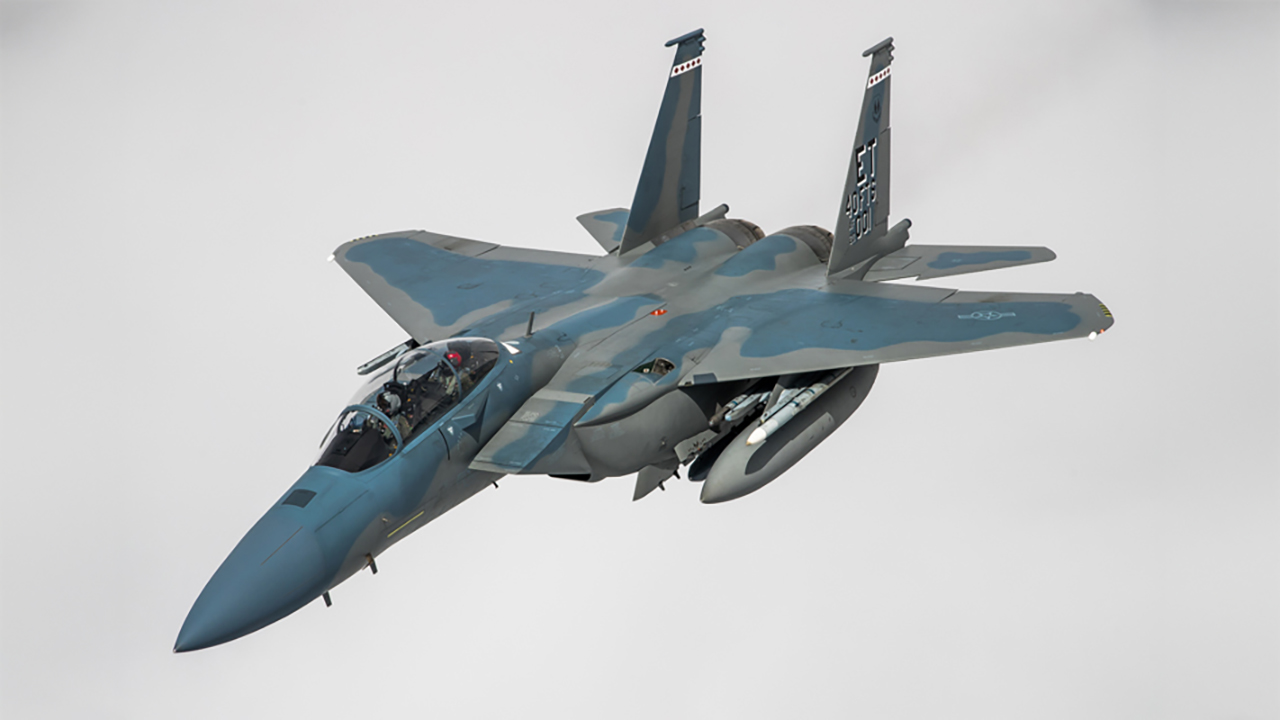
Initially only 25 aircraft were requested, although it was reported that they could be increased to 50. The sale of the MLU modification kits was also expected, as Israel requested the upgrade of its 25 F-15I Ra’am to an avionic configuration similar to the F-15EX.
The Role of the F-15IA
Israel has always valued the operational range of the platforms it acquires, and has long praised the F-15 exactly for that. In fact, the F-15 has been for a long time the main aircraft used by the Israeli Air Force to strike targets at very long distances while still being able to carry heavy payloads.
The Advanced Eagle, since the early days of the program, has been said to feature a further enhanced range and payload. The new advanced capabilities of the Advanced Eagle would also allow the fighter to better integrate with the F-35I Adir in service in Israel.
Israel currently operates a fleet of 25 F-15I Ra’am aircraft, which were based on the F-15E Strike Eagle. With the new deal, the Israeli Air Force would double the F-15 fleet dedicated to strike roles.

Israel also operates a fleet of older F-15A/B/C/D Eagles, locally known as Baz, which are used both for air-to-air and air-to-ground roles. While these are continually upgraded, they are starting to show their age.
It is unclear however which will be the future composition of the Israeli F-15 fleet and whether the F-15IA procurement will lead to the retirement of the older Baz jets. What is clear is that the F-15 will continue to serve in Israel for decades to come, complementing the F-35 Adir as the main strike platforms.