The Middle East has emerged as a major hub for international air travel, with airlines like Emirates, Etihad, and Qatar Airways setting the benchmark for luxury, connectivity, and service. These carriers have not only transformed the way passengers experience long-haul flights but have also strategically expanded their networks to connect the world through their home bases in Dubai, Abu Dhabi, and Doha.
With each airline boasting a unique approach to route expansion, understanding which carrier flies to the most destinations can be an essential factor for travelers and aviation enthusiasts alike. Beyond just numbers, the reach of an airline influences connectivity, convenience, and overall travel experience.
Frequent flyers, business passengers, and holidaymakers often consider destination variety alongside service quality and flight frequency. This comparison seeks to break down the global reach of Emirates, Etihad, and Qatar Airways, highlighting which carrier leads in terms of destinations served, while also considering their strategic growth in emerging and established markets.
Qatar Airways’ Expansive Network From Doha

Qatar Airways has emerged as a global leader in terms of connectivity. Its strategy combines direct flights to major global cities with strong codeshare agreements, enabling passengers to access an even broader network. Qatar Airways is known for both its premium service and aggressive route expansion. It currently serves the most destinations out of all three carriers, with over 175 in its roster per Cirium, an aviation analytics company.
The airline has focused on establishing Doha as a central hub in the Middle East, connecting passengers from Europe, Africa, Asia, and the Americas. Its expansion strategy often prioritizes underserved routes and emerging markets, allowing it to capture new travel demand while maintaining its reputation for luxury. Qatar Airways’ November schedule is dominated by extreme frequency and capacity.
This is best demonstrated on its  Doha Hamad International Airport–
  London Heathrow Airport trunk, with 283 flights and around 100,000 seats each way, generating more than 326 million ASMs. This makes it one of the largest single city-pair deployments globally and a clear long-haul revenue anchor.
  Bangkok Suvarnabhumi Airport also appears as a major long-haul workhorse with 180 flights and 77,000 seats (254 million ASMs).
This underscores its heavy reliance on Southeast Asia demand. In contrast, ultrashort-haul Gulf sectors such as Doha- Sharjah International Airport(210 flights) and Doha–  Dubai International Airport (150 flights) deliver high frequencies but tiny ASM footprints due to sub-300-mile stage lengths. These function primarily as tight-cycle connectivity feeders to its hub.
Jeddah Airport and Riyadh Airport provide significant mid-range regional volume (170 and 165 flights, respectively). Overall, the shape of the sheet highlights Qatar Airways’ classic hub-and-spoke posture: one or two huge intercontinental pillars, a thick Asian long-haul spine, and dense, high-frequency short-haul spokes to keep the transfer machine full.
Emirates’ Global Reach From Dubai

Emirates has built its reputation on connecting the world through its hub in Dubai. The airline specializes in long-haul travel, connecting major cities across six continents. Known for its extensive network serving over 160 destinations, Emirates aims to provide passengers with seamless connections and multiple daily flights to popular destinations.
One of Emirates’ key strengths is its focus on underserved long-haul markets. By offering direct flights from Dubai to destinations that might otherwise require stopovers, Emirates caters to both business and leisure travelers seeking convenience and efficiency. This strategy has positioned Dubai as a central transit hub for global travel.
Based on Cirium’s data for Emirates’ scheduled operations in November, the airline’s most frequent routes are centered around its Dubai hub, underscoring its role as a global connecting point. The Dubai–London Heathrow route stands out as the busiest, with 206 flights in each direction and over 98,500 seats, reflecting the high demand for travel between the UAE and the UK.
Other heavily served routes include Bangkok and  Mumbai Airport, each with 150 return flights, highlighting Emirates’ strong presence in key Asian markets. Regional connections such as Kuwait International Airportand Cairo International Airport are also well represented, operating 120–124 flights in each direction. These cater to high-frequency business and leisure travel within the Middle East and North Africa.
Etihad Airways’ Strategic Growth from Abu Dhabi

Etihad Airways follows a slightly different strategy. While its network is smaller than Emirates’ and Qatar Airways’, at around 90 destinations served, Etihad focuses on strategic connectivity and partnerships with other carriers to extend its global reach. This approach allows the airline to offer access to destinations beyond its direct flight network.
Etihad’s route expansion often targets key business hubs and high-demand leisure markets. The airline has steadily increased its presence in Europe, Asia, and North America, while maintaining a strong focus on service quality and passenger experience. Abu Dhabi’s smaller scale compared to Dubai allows for more personalized services, which is a hallmark of Etihad’s brand.
Etihad’s November schedule shows a highly balanced set of trunk routes built around Abu Dhabi (AUH) as the core hub, with many city-pairs operating at a consistent frequency of 120 flights for the month (roughly four daily in each direction). The busiest segment by capacity is Abu Dhabi International Airport – London Heathrow with roughly 49,500 seats each way and more than 169 million ASMs, highlighting London as a critical strategic market.
Major South Asian points such as Mumbai and  Delhi Indira Gandhi International Airport also feature prominently, each with around 30,000 seats and strong ASM values, reinforcing the importance of the India network in feeding long-haul traffic. Regional destinations like Doha, Dammam Airport, Muscat International Airport, Riyadh, and Tel Aviv Ben Gurion Airport also carry steady frequencies.
However, these routes have smaller seat volumes, indicating their role as short-haul connectors supporting network breadth rather than raw capacity. Overall, the grid suggests a dual-focus strategy, heavy deployment on a few long-haul profit centers complemented by dense, frequent regional spokes to maximize connectivity through Abu Dhabi.
Comparing Fleet Sizes

Emirates operates one of the world’s largest fleets of widebody aircraft, dominated by the Airbus A380 and Boeing 777. The A380s are deployed on high-demand long-haul routes, offering large passenger capacity and luxury services, while the 777s provide flexibility for both long and medium-haul destinations. This combination allows Emirates to maintain high-frequency flights and adjust capacity to match market demand efficiently.
Etihad relies on a mix of Airbus A350s, Boeing 787s, and a limited number of A380s. This fleet strategy emphasizes fuel efficiency, operational flexibility, and passenger comfort. The 787s and A350s enable Etihad to serve long-haul routes economically while maintaining high standards of in-flight service. Unlike Emirates, Etihad often leverages codeshare agreements to supplement its network, extending its reach without the need for a larger fleet.
|
Aircraft Family (Active/Parked) Per Planespotters.net |
Qatar Airways |
Emirates |
Etihad |
|---|---|---|---|
|
Airbus A320 |
29 |
1 |
36 |
|
Airbus A330 |
16 |
– |
– |
|
Airbus A350 |
60 |
12 |
9 |
|
Airbus A380 |
8 |
116 |
9 |
|
Boeing 777 |
64 |
140 |
14 |
|
Boeing 787 |
56 |
– |
47 |
|
Total |
233 |
269 |
115 |
Qatar Airways has developed a highly modern fleet, including Airbus A350s, Boeing 777s, and Boeing 787s, supporting its ambitious global expansion strategy. The airline uses its widebody aircraft for long-haul routes, ensuring high passenger capacity and connectivity from its Doha hub.
With a focus on both emerging and established markets, Qatar Airways’ fleet allows it to open new routes efficiently while maintaining service quality. A modern, versatile fleet gives all three carriers the ability to scale quickly, introduce seasonal flights, and respond to shifts in global travel demand, strengthening their competitive positions in the aviation market.

Qatar Airways Vs. Etihad: Which Carrier Wins With Its Widebody Fleet?
Qatar’s larger fleet is indicative of a higher-capacity, more profitable airline. Etihad has a more modern fleet.
Regional Coverage And Strategic Hubs

Each airline’s choice of hub influences which regions it serves most effectively. Emirates’ Dubai hub has made it a strong player in Asia, Europe, and Africa, often acting as a bridge between continents. Qatar Airways’ Doha hub allows for short transit times to major international markets, while Etihad’s Abu Dhabi hub emphasizes quality over sheer volume.
The positioning of each hub also affects the airline’s ability to respond to market changes, open new routes, and optimize flight schedules. Strategic hub placement ensures that passengers experience convenient connections and that airlines can capitalize on both business and leisure travel demand.
Beyond geographic placement, the airlines’ focus on hub efficiency and passenger experience plays a key role in their regional dominance. Fast transit times, coordinated schedules, and state-of-the-art terminals enhance connectivity and make these Middle Eastern hubs attractive for global travelers, strengthening the airlines’ reach without necessarily increasing fleet size.
The Bottom Line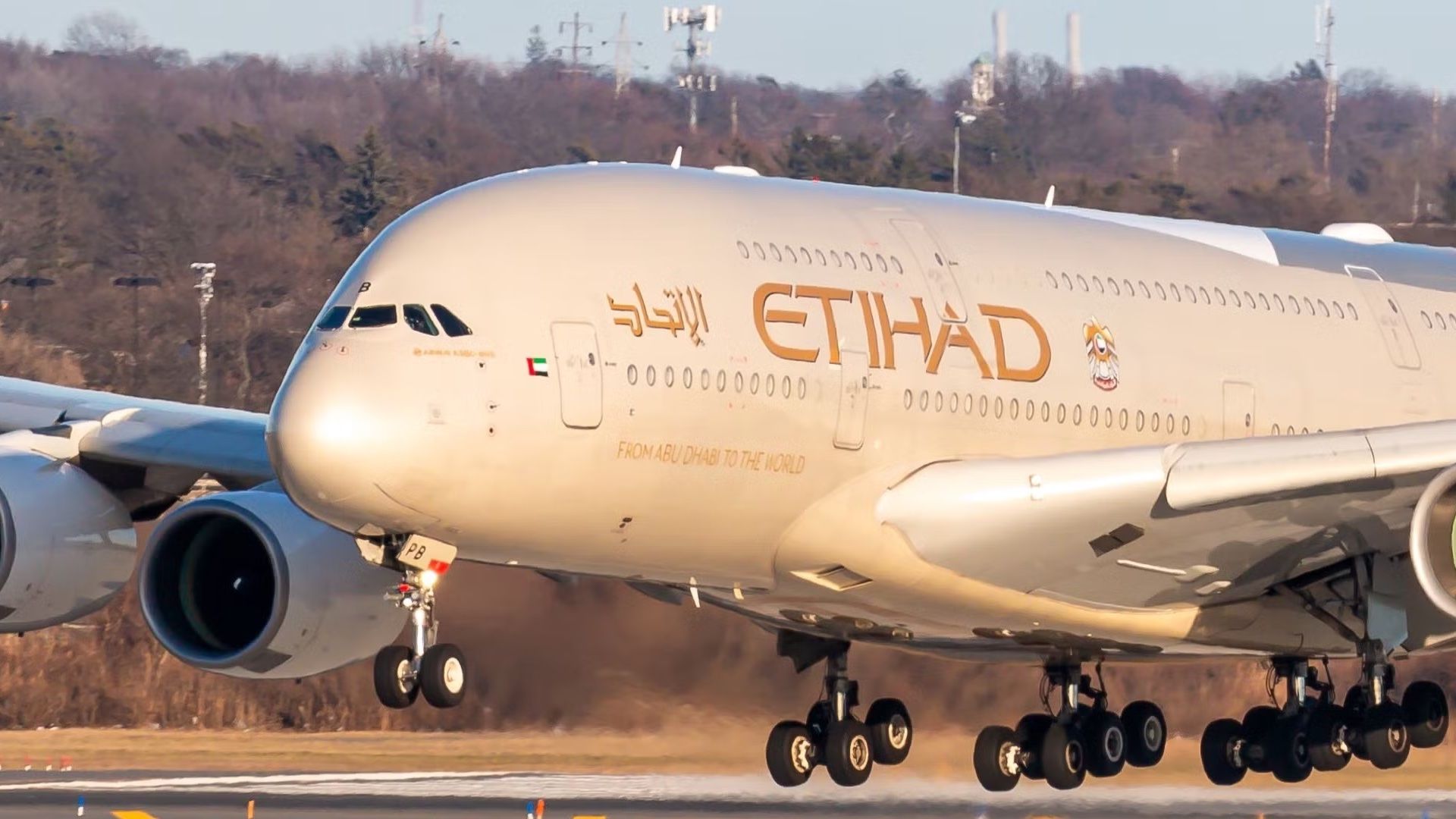
When evaluating Emirates, Etihad, and Qatar Airways, it’s clear that each carrier has a unique strategy shaping its global reach. Emirates’ extensive fleet and aggressive long-haul strategy allow it to serve a vast number of destinations directly. Qatar Airways leverages both its growing fleet and codeshare agreements to maximize connectivity, while Etihad emphasizes strategic destinations and partnerships to expand its network efficiently.
Ultimately, determining which airline flies to more destinations depends on whether you measure direct flights, codeshare access, or regional coverage. By analyzing route data and global reach, travelers can make informed choices based on their priorities, whether it’s convenience, luxury, or sheer connectivity.
Another way to evaluate these airlines is by considering the quality of connectivity rather than sheer quantity. Factors such as flight frequency, hub efficiency, and regional balance ensure that passengers can reach more destinations with fewer disruptions. In this sense, Emirates, Etihad, and Qatar Airways all offer competitive advantages, and the ‘best’ airline depends on the traveler’s specific needs rather than a simple destination count.