I love Norway. Not just for its beautiful mountains and fjords, but for the uniquely Norwegian quirks that make everyday life here an adventure.
As a Brit who’s living semi-permanently in Norway, it’s been fun to compare the differences and similarities between the two countries and get an outside perspective on what many Norwegians probably don’t think twice about. These range from charming oddities to fascinating nuggets of cultural insight.
While it’s impossible to capture all of them, here’s a list of my favourite Norwegian quirks that I’ve encountered during my time here so far.
1. Taco Friday
Do you know which country has the second-highest consumption rate of tacos per capita after Mexico? You’re probably thinking the US. I bet you didn’t expect the answer to be Norway. Yes, it turns out that the land of Vikings and salmon is completely taco-obsessed. Taco Friday or “tacofredag” is basically a holy day for most Norwegian households.
While Norwegian tacos are drastically different from the original versions from Mexico (and far less spicy), they are still delicious and can be prepared with seasoned ground beef, chicken, shrimp, fish, or anything else you fancy.
2. Pepsi Max Addiction
Fueled by the promotion of diet sodas as a more ‘healthy’ alternative, the Norwegian obsession with Pepsi Max has become a beloved part of the national identity. It’s the Norwegian drug of choice after all, so don’t be alarmed if you casually encounter Norwegians in the wild indulging in their favourite drink.
3. Norwegian Cabin Culture
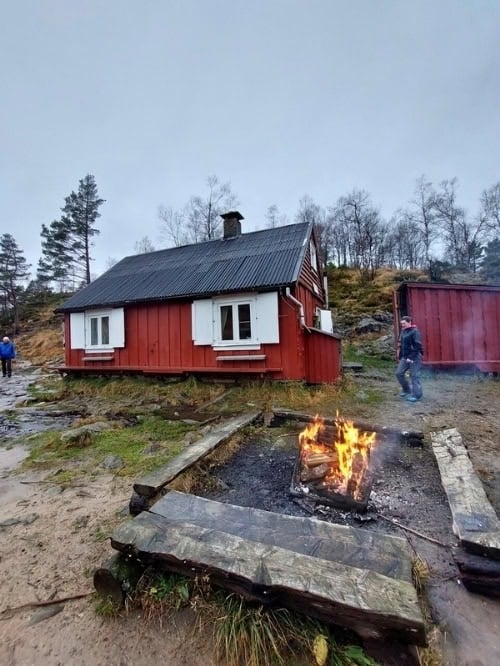
It’s very common for Norwegians to own a mountain cabin, called a hytte. You’ll see them dotted all over the mountains here when hiking. They vary in size from small basic log cabins with no plumbing to more extravagant holiday homes.
Hytte form a big part of Norwegian outdoorsy culture. During the Easter, summer, and winter holidays, Norwegians will flock to their hytte to spend time in nature, hike, ski or swim in picturesque alpine lakes. Often, these hytte will be passed down the family through generations, and many Norwegians grow up with fond childhood memories of time spent in their family’s hytte.
There are also public hytte on hiking trails designed to be used as shelters from the elements. The Norwegian Trekking Association owns many cabins on popular hiking routes in the mountains for their members to use. These cabins can also be booked in advance for overnight guests.
4. Social Distancing
I don’t think it’s a secret that Scandinavians aren’t the most socially extroverted people. Well, unless they’ve had some beers first, that is. Or you meet them on a hiking trail. Then it’s a different story. And can you blame them? No one wants to deal with the awkwardness of trying to think of things to say for 4 minutes straight while you’re stuck on the bus with a guy you met once and have nothing in common with.
Pro tip for talking to or making eye contact with strangers in Norway? Maybe don’t. Unless you’re out in nature, then it’s perfectly acceptable to smile, nod, and give a polite ‘hei hei’ as you pass.
For a hilarious explanation of Norwegian social norms in musical form, please check out my favourite Norwegian comedian, Sarah Løvald’s song with the inspired lyrics ‘I’m not rude, I’m just a Norwegian’.
5. National Pride
As a Brit, I’ve grown up understanding that bonding with my fellow compatriots means discussing all the ways in which the UK sucks and using self-deprecating humour as a coping mechanism. But it turns out that not every country is like this, and Norway actually has quite a lot of national pride.
If you’re travelling in Norway and feel the inexplicable urge to complain about the food, public transport, or some other aspect of the country that’s recently annoyed you, maybe don’t complain about it to a Norwegian. Even if they start complaining first, whatever you do, don’t agree with them. There’s no quicker way to make an enemy.
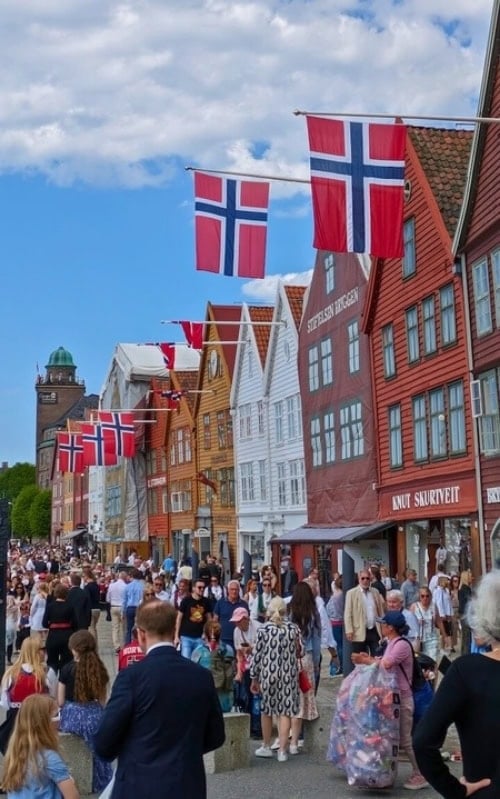
It’s quite common to see the Norwegian flag flying in major cities. And if you’re lucky enough to visit Norway to experience Constitution Day on the 17th of May, the flags will be flying everywhere. This is arguably one of the biggest celebrations of the year and a chance for Norwegians to celebrate their traditional culture. It’s quite special and a true testament to the Norwegian sense of national pride.
6. Skiing as a Mode of Transport
There’s a phrase that every expat living in Norway will hear from their Norwegian friends, colleagues, or neighbours at least once each winter: ‘In Norway, we are born with skis on our feet!’
It makes sense. When you live in a country that spends half the year buried under snow, skiing is basically an essential skill. However, as someone who didn’t grow up in a particularly snowy country, I still find it a novelty to watch Norwegians cross-country ski around Bergen as a mode of transport.
On the little hill leading from my apartment building to the closest bus stop, I’ll often see parents teaching their toddlers how to ski in the winter on tiny, child-sized skis. There’s one guy who lives in our residential area who likes to walk his dog by letting the giant husky pull him along on his skis, which I think is inspired. The dog gets some exercise in, the man gets a free ride.
7. No Such Thing as Bad Weather

Another favourite quote from the Norwegians is ‘There’s no such thing as bad weather, only bad clothes.’ Well, as someone currently living in Europe’s rainiest city (Bergen), I can say that objectively bad weather does exist, it just doesn’t prevent Norwegians from doing their favourite thing: being outdoors in nature.
I’ve made the mistake of hiking up a mountain in a light storm before, only to be passed by groups of Norwegians trail running, completely unbothered by the slippery mossy rocks of the hiking trail or the relentless icy rain. For the non-Norwegians: I can promise you that no amount of Gore-Tex makes that a less miserable experience.
8. Trolls
A beloved part of Norwegian folklore, trolls have been co-opted by Norway’s tourism industry to be an ugly-cute and slightly unsettling national mascot for the country.
You’ll see them everywhere in the airports and tourist shops: beware the troll magnets, troll dolls, troll t-shirts. On top of Mt. Fløyen in Bergen, you’ll even find a troll forest, with human-sized troll sculptures you can take selfies with.
Tourism aside, trolls actually have some really fascinating origins in Norse mythology and are a huge part of Nordic pop culture across Norway, Denmark, Sweden, and Finland. Remember the Moomins? Also trolls. Just very cute ones!
Read More: Norway: Trolls, Glaciers and an Obsession with Mayonnaise
9. Russebuss: The Student Party Bus Tradition
‘What,’ I asked my partner one random Friday in spring as we wandered around Bergen city centre, ‘on earth is that?’
A decorated bus blasting the most awful, obnoxiously loud rap music had just parked up. Several Norwegian teenagers dressed in red overalls spilled out of it, drinking beer and chatting loudly. It was 2 pm. The sun was shining. I was very confused.
‘It’s a russebuss,’ he explained. ‘A party bus for students. It’s how they celebrate the end of their exams and school graduation.’
The russebuss culture means weeks of partying, pranks, and fun for Norwegian school-leavers. However, it has also attracted increasing controversy recently as the celebrations often start well before exams do, and renting out a party bus is an expensive way to celebrate.
10. Early-Risers
Norway is a country of morning people. Getting up at 5 am and starting your workday by 7 am is normal here. It also means that they finish early, usually by 3 pm, in time to pick up the kids from school and make it home for an early dinnertime of 4-5 pm. Since dinner is eaten so early, there’s normally time for a late-night snack at around 7-8 pm before going to bed.
11. Panting Plastic Bottles
Panting is the ingenious recycling system that rewards people for returning their plastic bottles. The system refunds people a few krone (kr) for recycling their plastic bottles at one of the conveniently located ‘panting stations’ found in every supermarket.
Bottles that are part of the scheme have a label on them indicating how much money you could get back – usually 2 or 3 kr. However, if you collect a large enough amount of bottles, that can add up to a decent amount!
While panting is not unique to Norway and exists across all of Scandinavia and several other developed countries, it’s a truly amazing environmental scheme that I would love to see rolled out across Europe and eventually the world. It’s such a simple but effective system for reducing plastic waste.
12. The Long Shoehorn
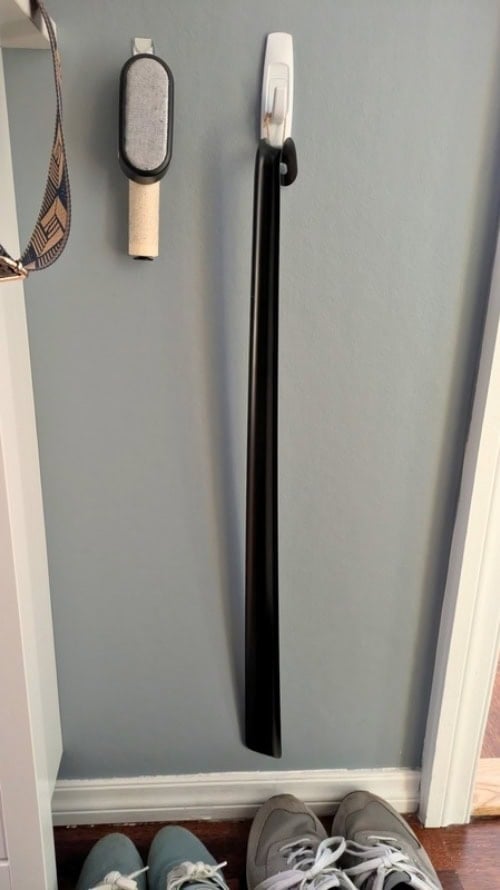
What’s one essential you’ll find in every Norwegian home? A long shoehorn! Very specific, yes, but also extremely convenient. After trying one, you’ll never want to go back to one of those tiny plastic shoehorns that you have to bend down to use.
The long shoehorn usually reaches to your hip and allows you to slip into your hiking boots with ease – meaning less time struggling with your shoes and more time out in nature. It’s accessible, sleek, comes in a variety of colours and materials, and will change the way you put your shoes on forever.
I highly recommend procuring your long shoehorn like a true Scandinavian: from Ikea. I promise this isn’t a paid ad – I’m just a passionate long shoehorn advocate.
Need a hand planning your trip? Here are the sites and services we rely on most, from booking tools to travel products we love.
Inspire your next adventure with our articles below:
Author Bio: Anna Robin is a British writer currently living a semi-nomadic life with a home base in Bergen, Norway. She loves hiking misty mountaintops, exploring arctic landscapes and romanticising far-flung places. She writes about life in Norway and Nordic travel on her blog
Want to discover more hidden gems and helpful travel tips? Join our free newsletter for the latest travel secrets and travel articles.
We are reader-supported and may earn a commission on purchases made through links in this article.